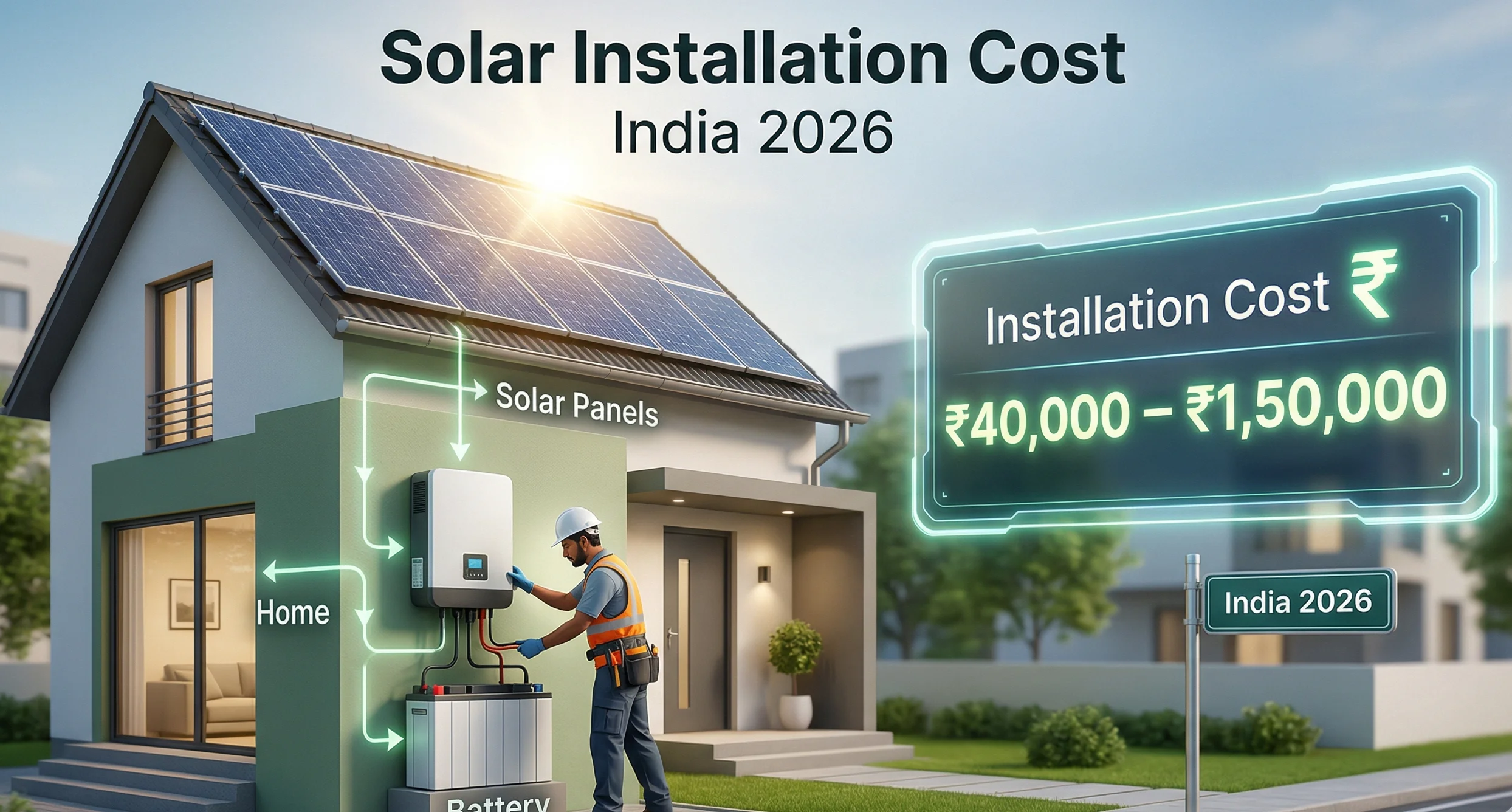
Thinking about installing a solar inverter in India? Here's what you need to know. It's a great step towards saving on electricity bills and using cleaner energy. Let's break down the costs and process in simple terms.
What Goes into the Total Cost?
The price you pay isn't just for the inverter box. It's a package deal. You're paying for the equipment, the skill to install it safely, and the support you get later.
Handy Tools For You
- The Inverter Itself: This is the main device that converts solar power into usable electricity for your home. Prices vary a lot by brand, type (like on-grid, off-grid, or hybrid), and capacity (measured in kVA).
- Installation Labor: A professional needs to set it up, connect it to your solar panels and your home's electrical system. This fee depends on the installer's expertise and your location.
- Extra Parts: You might need additional cables, mounting structures, safety devices, or a battery if you want backup power.
- Warranty & Service: A good warranty (often 5-10 years) and reliable after-sales service are crucial. Sometimes paying a bit more upfront saves a lot of hassle later.
How to Get a Good Deal
Don't just go with the first quote you get. Be a smart shopper.
- Know Your Needs: Calculate how much power your essential appliances use. This helps decide the inverter capacity you need. An oversized inverter is a waste of money, an undersized one won't work well.
- Shop Around: Get detailed quotes from at least 3-4 certified installers. Ask them to break down the cost: inverter price, labor, other components.
- Check Reviews: Look up the installer's reputation online or ask for references. Good workmanship is key for a system that lasts.
- Ask About Subsidies: Depending on your state, there might be government subsidies or bank loans for solar installations. Your installer should help you with this. You can also check official portals like the Ministry of New and Renewable Energy (MNRE) for schemes.
A Rough Price Range (for 2024)
Prices change, but here's a general idea to give you a starting point. These are approximate costs for a complete installation (inverter + basic installation).
Inverter Capacity | Estimated Price Range (₹)
----------------- | ---------------------------
1 kVA             | 25,000 - 40,000
2 kVA             | 40,000 - 65,000
3 kVA             | 55,000 - 90,000
5 kVA             | 80,000 - 1,40,000
Note: This is for the inverter system. If you need solar panels too, the cost will be significantly higher. For help with calculations, you might find tools like our EMI Calculator useful to plan your budget.
Final Thoughts
Investing in a solar inverter is about long-term savings and energy independence. Take your time to research, compare quotes thoroughly, and choose an installer you trust. A well-installed system will pay for itself over the years.
Frequently Asked Questions
📚 Read Next
What's the main difference between an on-grid and off-grid inverter?
An on-grid inverter is connected to the main electricity grid. It sends excess solar power back to the grid (which can earn you credits). It doesn't provide backup during a grid power cut. An off-grid inverter works with batteries to store solar power and can run your home independently, giving you backup during outages.
How long does a solar inverter last?
A good quality solar inverter typically lasts between 10 to 15 years. Many come with a standard warranty of 5 years, which can often be extended. Its lifespan depends on the brand, usage, and environmental conditions like heat.
Can I install the solar inverter myself to save money?
It's strongly not recommended. Solar systems involve high-voltage DC and AC electricity. Incorrect installation can lead to serious safety hazards like fires, electric shocks, or damage to your appliances. It can also void your product warranty. Always hire a certified and experienced technician.
Are there any monthly maintenance costs?
Generally, no major monthly costs. Solar inverters require minimal maintenance. You should just keep the area around it clean and ventilated, and occasionally check for any error messages on the display. A professional check-up every 2-3 years is a good idea.