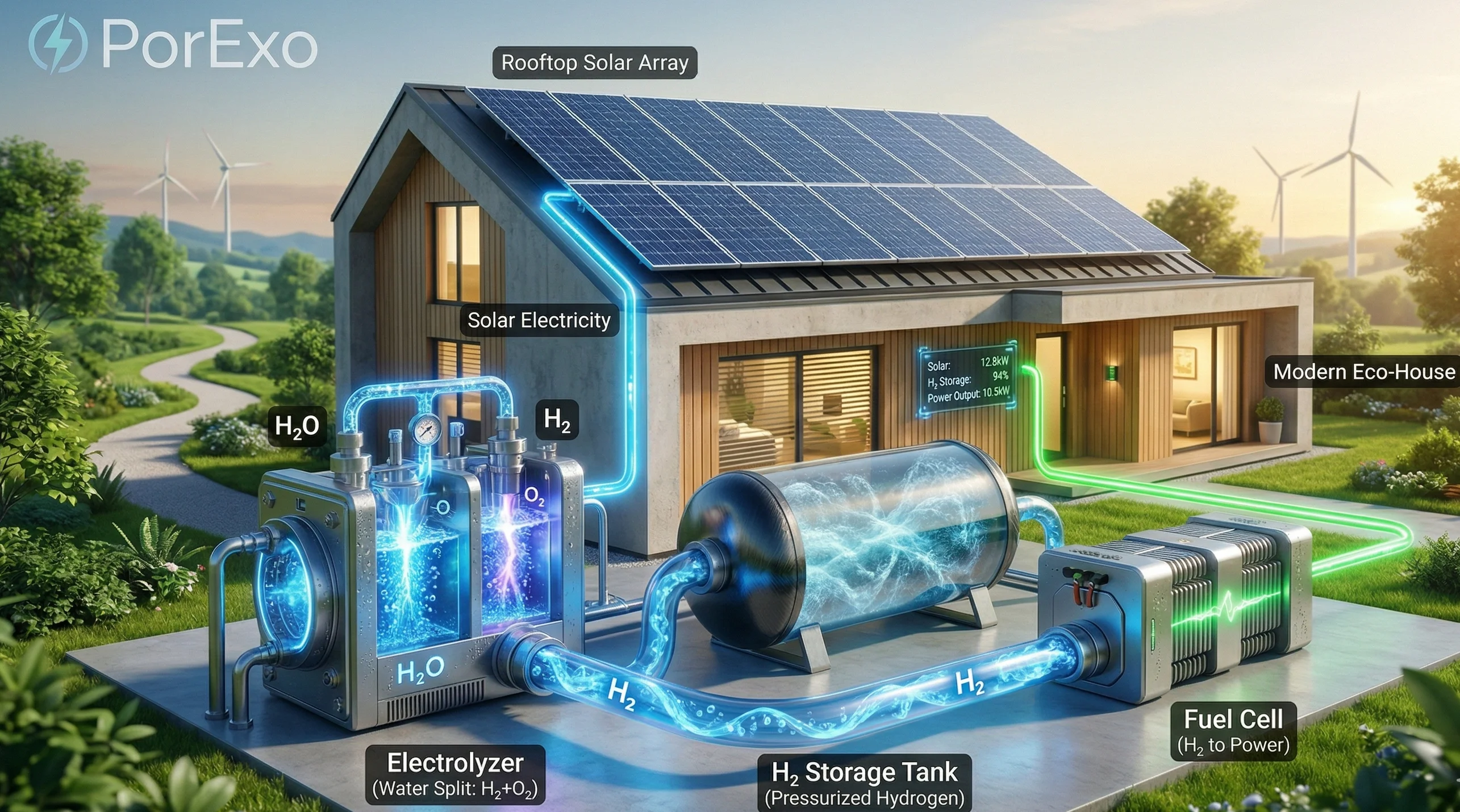
If you're curious about hydrogen solar panels, here's what you need to know. Think of it as a clever two-step process for storing sunshine.
Regular solar panels make electricity when the sun is shining. But what happens at night or on cloudy days? That's where hydrogen comes in. A hydrogen solar panel system uses extra solar power to split water into hydrogen and oxygen. This hydrogen gas can be stored in tanks, just like you'd store a battery. Later, when you need power, the hydrogen can be used in a fuel cell to generate electricity again, with only water as a byproduct.
Handy Tools For You
How It Works: A Simple Breakdown
The process involves a few key parts working together:
- Solar Panels: Capture sunlight and convert it into electrical energy.
- Electrolyzer: This device uses the extra solar electricity to perform electrolysis, splitting water (H₂O) into hydrogen (H₂) and oxygen (O₂).
- Storage Tank: The pure hydrogen gas is compressed and stored safely for later.
- Fuel Cell: When power is needed, the stored hydrogen is fed into a fuel cell. It combines with oxygen from the air to produce electricity, heat, and water vapor.
Why Consider This Combination?
Pairing solar panels with hydrogen production tackles one of renewable energy's biggest challenges: intermittency. The sun isn't always available, but you can store hydrogen for weeks or months. This makes your energy supply much more reliable.
It's a promising way to reduce reliance on fossil fuels and lower carbon emissions. For a deeper look at how solar technology integrates with other systems, you can explore resources from reputable organizations like the National Renewable Energy Laboratory (NREL).
Getting Started with Your Own Energy Projects
Understanding energy systems often starts with the basics. If you're interested in calculations for other sustainable projects, like figuring out loan payments for equipment, our EMI Calculator can help you plan your finances. For converting energy-related data, you might find our Unit Converter handy.
// Simplified logic of a hydrogen solar system
IF solar_power_generated > immediate_energy_demand THEN
    send_excess_power_to(electrolyzer)
    hydrogen_produced = electrolyzer.split_water()
    storage_tank.store(hydrogen_produced)
ELSE IF energy_demand > solar_power_generated THEN
    hydrogen = storage_tank.release()
    electricity = fuel_cell.generate(hydrogen)
    supply_power(electricity)
END IF
Frequently Asked Questions
📚 Read Next



Is a hydrogen solar panel system efficient?
The overall efficiency is lower than just using solar panels with batteries because energy is lost in the conversion steps (electricity to hydrogen and back to electricity). However, its main advantage is the ability to store very large amounts of energy for long periods, which batteries can't do as cost-effectively yet.
Can I install one at my home?
Small-scale residential systems are emerging but are not yet common or as affordable as standard solar-plus-battery setups. They are more complex and currently better suited for larger-scale applications like community grids or industrial use.
What happens to the oxygen produced?
In most systems, the oxygen is simply released safely into the atmosphere. It's a natural part of the air we breathe, so it's not a harmful byproduct.
Is it safe to store hydrogen?
Yes, with proper engineering. Hydrogen storage tanks are designed to be very robust. Like gasoline or natural gas, it's a fuel that requires careful handling, but established safety standards and technologies exist for it.