Hey there! If you've ever wondered what's inside the battery of your phone, laptop, or electric car, you're in the right place. Let's talk about the different shapes and sizes of lithium battery cells. Think of them like different types of building blocks—each one is good for specific jobs.
The Main Types You'll Come Across
Lithium battery cells mainly come in four common forms. We'll go through each one so you know what they look like and where you might find them.
Handy Tools For You
1. 18650 Cells (The Classic Cylinder)
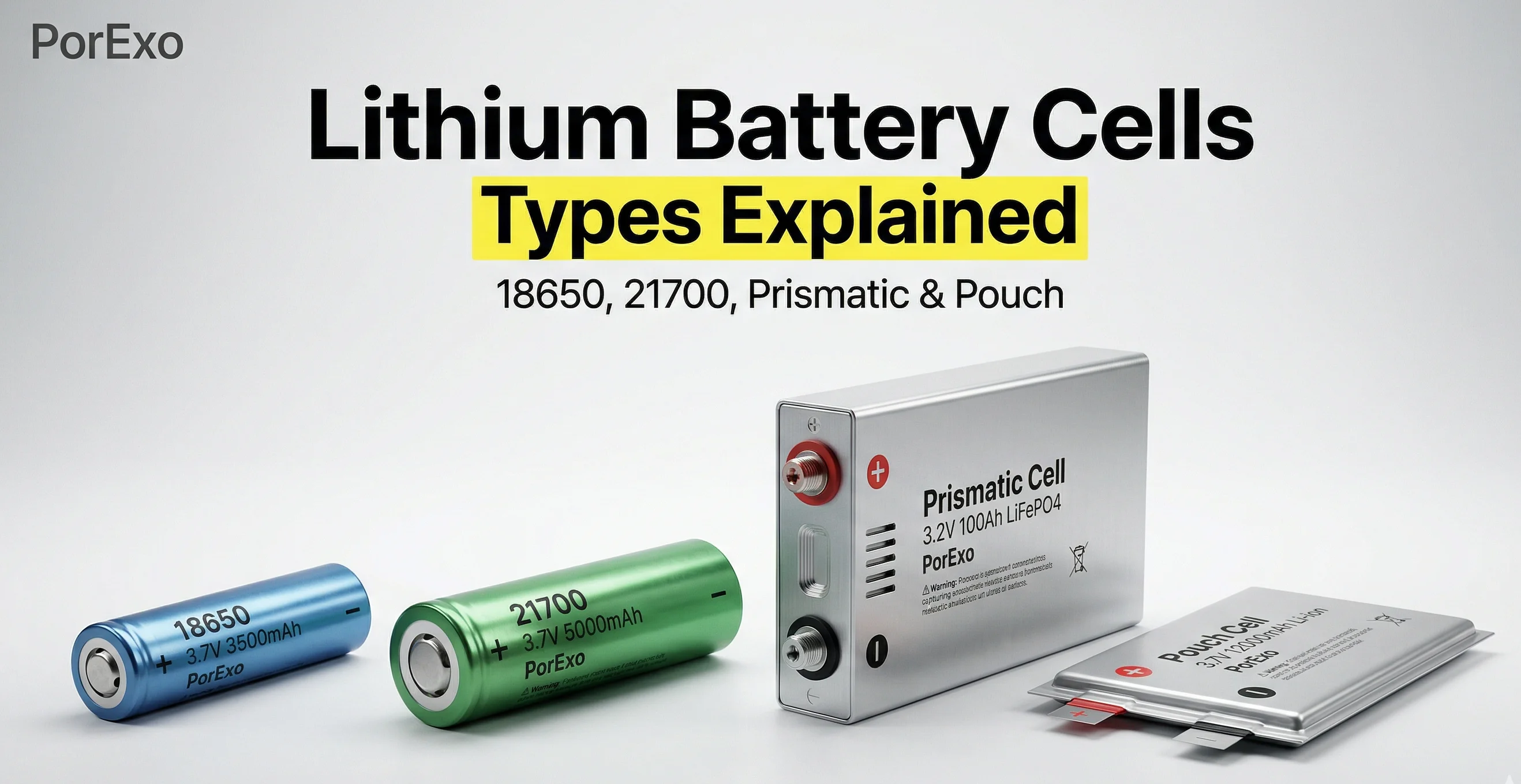
These are the workhorses. The name "18650" is actually its size: 18mm wide and 65mm tall. They're shaped like a small tube (cylindrical) and are incredibly common.
- Where you'll see them: Old laptop batteries, powerful flashlights, and even some power tools.
- Why they're popular: They are reliable, easy to manufacture in huge numbers, and have a sturdy metal case.
2. 21700 Cells (The Bigger, More Powerful Cylinder)
This is the newer, bigger sibling of the 18650. As you might guess, it's 21mm wide and 70mm tall. That extra space allows it to store more energy and deliver more power.
- Where you'll see them: Many modern electric vehicles (like Teslas) and high-end electric bikes.
- The main advantage: Compared to an 18650, a 21700 cell can hold more charge (capacity) and provide a stronger burst of power when needed.
3. Prismatic Cells (The Flat, Rectangular Block)
These cells look like thin, hardcover books or small metal boxes. They have a flat, rectangular shape, which makes them efficient to pack together in a battery pack.
- Where you'll see them: This is a favorite for electric cars and home energy storage systems because you can stack them neatly.
- Why they're used: Their shape saves space and allows for a very dense battery pack, which is perfect for vehicles where every inch counts.
4. Pouch Cells (The Thin and Flexible One)
Also called "laminated" cells, these don't have a hard metal shell. Instead, they're sealed in a flexible, foil-like pouch. This makes them much lighter and able to be shaped differently.
- Where you'll see them: Smartphones, tablets, drones, and any device where weight and a custom shape are really important.
- The big benefit: Their flexibility allows designers to create batteries that fit into slim and uniquely shaped gadgets. You can learn more about battery design principles from resources like Battery University.
Quick Comparison
Here's a simple table to see the differences side-by-side:
| Cell Type | Shape | Common Uses | Key Trait |
|---|---|---|---|
| 18650 | Cylinder | Laptops, Flashlights | Reliable & Standard |
| 21700 | Cylinder (Larger) | Electric Cars, E-Bikes | Higher Capacity & Power |
| Prismatic | Flat Rectangle | Electric Vehicles, Home Storage | Space-Efficient Packing |
| Pouch | Thin & Flexible Pouch | Phones, Tablets, Drones | Lightweight & Custom Shapes |
# A simple example showing how you might model a basic battery cell in code.
class BatteryCell:
    def __init__(self, cell_type, capacity_mah, shape):
        self.cell_type = cell_type  # e.g., '18650', 'Pouch'
        self.capacity = capacity_mah # capacity in milliamp-hours
        self.shape = shape          # e.g., 'Cylindrical', 'Prismatic'

    def describe(self):
        return f"This is a {self.cell_type} cell. It's {self.shape} and holds {self.capacity}mAh."

# Let's create an example cell
my_cell = BatteryCell('21700', 5000, 'Cylindrical')
print(my_cell.describe())
# Output: This is a 21700 cell. It's Cylindrical and holds 5000mAh.
Frequently Asked Questions
📚 Read Next
Which type of cell is the best?
There's no single "best" type. It depends entirely on what you need! For a high-power drill, a cylindrical cell (like a 21700) might be best. For a slim smartphone, a pouch cell is the only practical choice. Engineers pick the cell that best fits the device's requirements for size, weight, power, and safety.
Are pouch cells less safe because they're soft?
Not necessarily. While their soft pouch doesn't provide the same rigid protection as a metal can, they are designed with multiple internal safety features. The main thing is that they must be handled carefully during manufacturing and use to avoid punctures. For everyday devices like your phone, they are perfectly safe.
Why do electric cars use different cell types?
It's a trade-off. Car manufacturers choose based on their design goals. Tesla famously uses thousands of small cylindrical cells (21700) for great performance and cooling. Other companies might use large prismatic cells because they are easier to assemble into a pack and can save space. It's all about the specific engineering approach for that vehicle.
Can I replace an 18650 with a 21700 in my device?
Usually not directly, no. They are different sizes! A 21700 is both wider and taller than an 18650, so it simply won't fit into a battery compartment designed for the smaller cell. Always use the cell size specified by the device manufacturer.