Let's talk about half cut solar cells. It's a pretty clever idea. Imagine a standard solar cell, the little square that makes up a panel. Now, picture cutting it in half. That's essentially what this technology does. But why would anyone do that? It's not just for looks—it actually makes the solar panel work better.
The main reason is to tackle something called resistive losses. In a regular, full-sized cell, the electrical current has to travel a longer distance across the cell to get to the wires on the side. This journey creates resistance, which wastes some of the energy as heat. By cutting the cell in half, you shorten that journey. The current has less distance to travel, so there's less resistance and less energy wasted. This means more of the sunlight you capture gets turned into usable electricity.
Handy Tools For You
Why Are Half-Cut Cells a Good Idea?
Here are the main benefits you get from using these split cells:
- They're more efficient: As we just discussed, with lower resistive losses, more of the sun's power becomes electricity for your home or business.
- They handle shade better: This is a big one. If one half of a cell is in the shade (from a tree branch or chimney, for example), the other half can often keep working independently. In a traditional panel, shading one cell can sometimes shut down a whole section.
- They run cooler and last longer: Less energy lost as heat means the cells themselves don't get as hot. Since heat is a major factor in wear and tear, cooler operation can help the panel last longer.
- They can be cost-effective: While the manufacturing process is a bit more involved, the gains in performance and durability often make them a smart choice for the price.
You can think of it like traffic. A full-sized cell is a long, single-lane road where traffic (the electrical current) can get congested. A half-cut cell setup is like splitting that road into two shorter, parallel lanes. The traffic flows more smoothly, with fewer jams and less engine heat (energy loss).
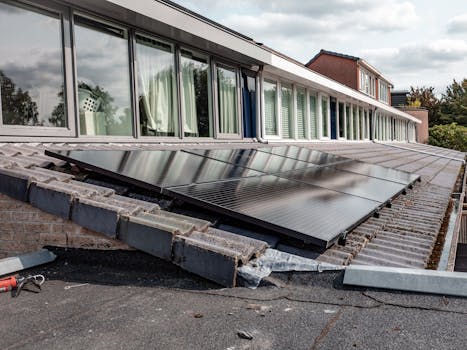
If you're looking into solar panels for your home, you'll likely come across panels built with this technology. It's become a common feature in many modern, efficient panels on the market today.
Frequently Asked Questions
📚 Read Next
Are half-cut solar panels more expensive?
They can be slightly more expensive to manufacture because of the extra cutting step. However, the increase in efficiency and performance often means you get more power for your money, making them a good value in the long run. The price difference isn't usually huge.
Can I mix half-cut and full-cell panels in one system?
Technically, you could, but it's generally not recommended. For your solar system to work at its best, all the panels should have similar electrical characteristics (like voltage and current). Mixing different cell types can lead to performance issues where the entire system is limited by the weakest panel. It's best to use the same panel model throughout an array.
Do half-cut cells break more easily?
Not necessarily. The cutting process is done with precision lasers, and the cells are then carefully handled and encapsulated within the durable glass and frame of the solar panel. The final panel is just as robust as a traditional one. The real advantage is their operational durability due to lower heat.
For more details on how solar technology works, you can check out resources from the U.S. Department of Energy's Solar Energy Technologies Office. If you're comparing different panel types for a project, our Unit Converter might be handy for calculations, and you can use our Percentage Calculator to figure out efficiency gains.