Hey there! If you're just starting out with the ESP32, all those little pins on the board can look a bit confusing. Don't worry, it's like learning the layout of a new room. Let's walk through what each pin does, and I'll show you a simple diagram to make it all click.
Think of the ESP32's pins as different tools in a toolbox. Some are for power, some are for sending data, and others have special jobs. Knowing which is which helps you connect sensors, lights, and other components without any guesswork.
Handy Tools For You
What the Pins Do
- GPIO Pins: These are your general-purpose input/output pins. You can use them to read a button press or light up an LED. Not all are available to use, though—some have special roles.
- Power Pins: Look for pins labeled
3V3andGND. The 3V3 pin supplies 3.3 volts to your components, and GND is the ground, completing the circuit. - Communication Pins: These are for talking to other devices. You have pins for I2C, SPI, UART, and even built-in WiFi and Bluetooth.
- Special Pins: Some pins can read analog signals (like from a potentiometer), create analog-like signals with PWM (to dim an LED), or even touch inputs.
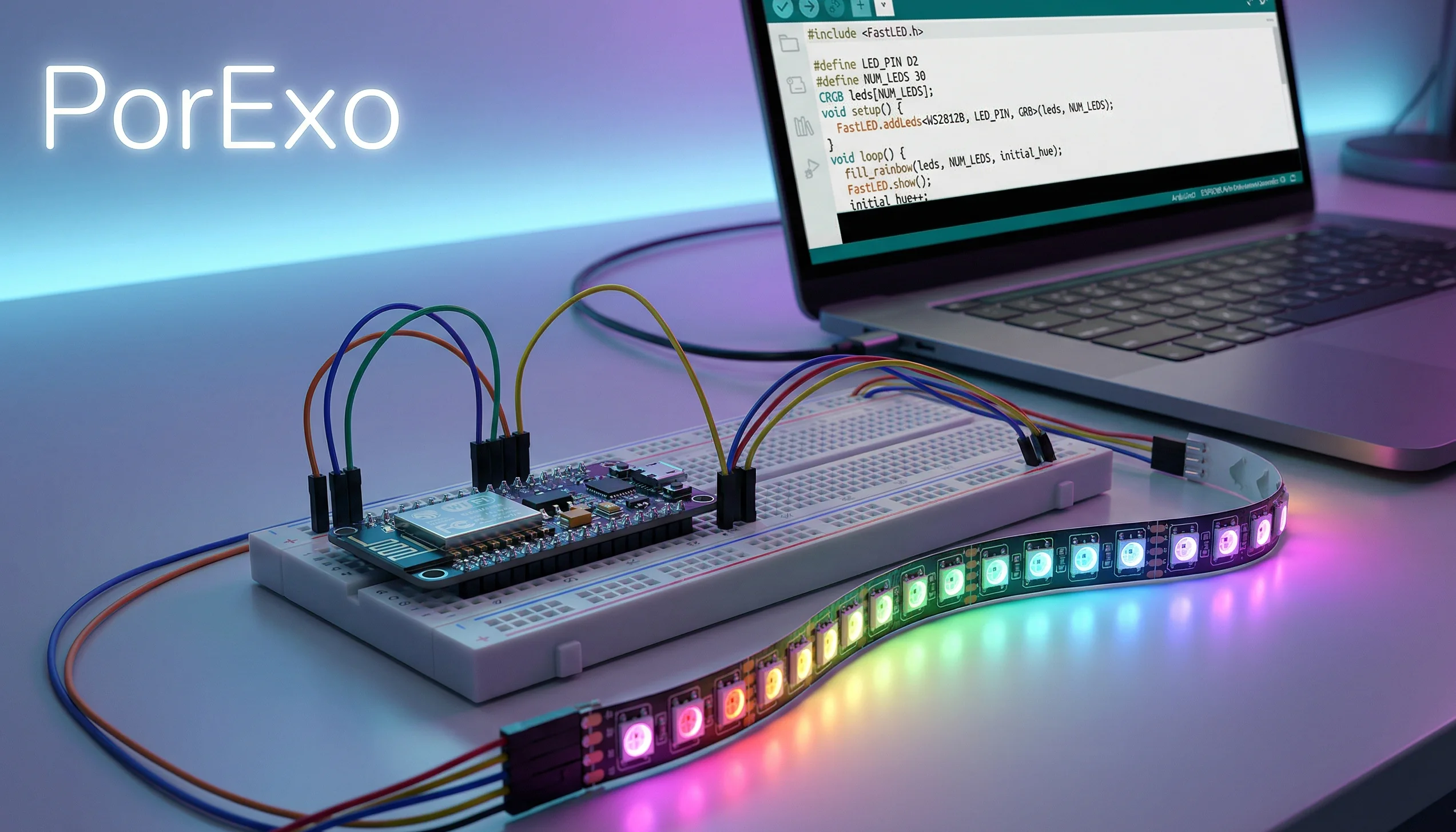
The best way to keep track is with a pinout diagram. It's a map that labels every pin. Here’s a basic example of how you might reference a pin in your code to set it up as an output:
// Setting up GPIO pin 2 to control an LED
const int ledPin = 2;

void setup() {
  pinMode(ledPin, OUTPUT); // Tell the ESP32 this pin is an output
}

void loop() {
  digitalWrite(ledPin, HIGH); // Turn the LED on
  delay(1000);
  digitalWrite(ledPin, LOW);  // Turn the LED off
  delay(1000);
}
Before you wire anything, always check your specific ESP32 board's pinout. Popular boards like the ESP32 DevKit or NodeMCU-32S have slight differences. A great place to find accurate diagrams is the official Espressif documentation.
For more projects involving microcontrollers and pin management, you might find tools like our JSON Editor or Unit Converter helpful for related tasks.
Frequently Asked Questions
📚 Read Next


Can I use any GPIO pin for anything?
Not exactly. While many pins are flexible, some have fixed purposes. For example, GPIOs 6 to 11 are often connected to the board's flash memory and using them can crash your program. Always check a pinout guide for your specific board first.
What's the difference between 3.3V and 5V pins on the ESP32?
The ESP32 chip itself runs on 3.3V logic. The 3V3 pin provides this voltage. While some boards have a VIN or 5V pin, that's usually for powering the board with a 5V supply (like from a USB cable). You should not connect a 5V signal directly to any other GPIO pin, as it can damage the chip.
How many pins can I use for analog input?
The ESP32 has a built-in Analog-to-Digital Converter (ADC) that can read from multiple pins. On most boards, you can use about 15-18 pins for analog input, but their accuracy can vary. It's best for reading sensors like light or temperature sensors.