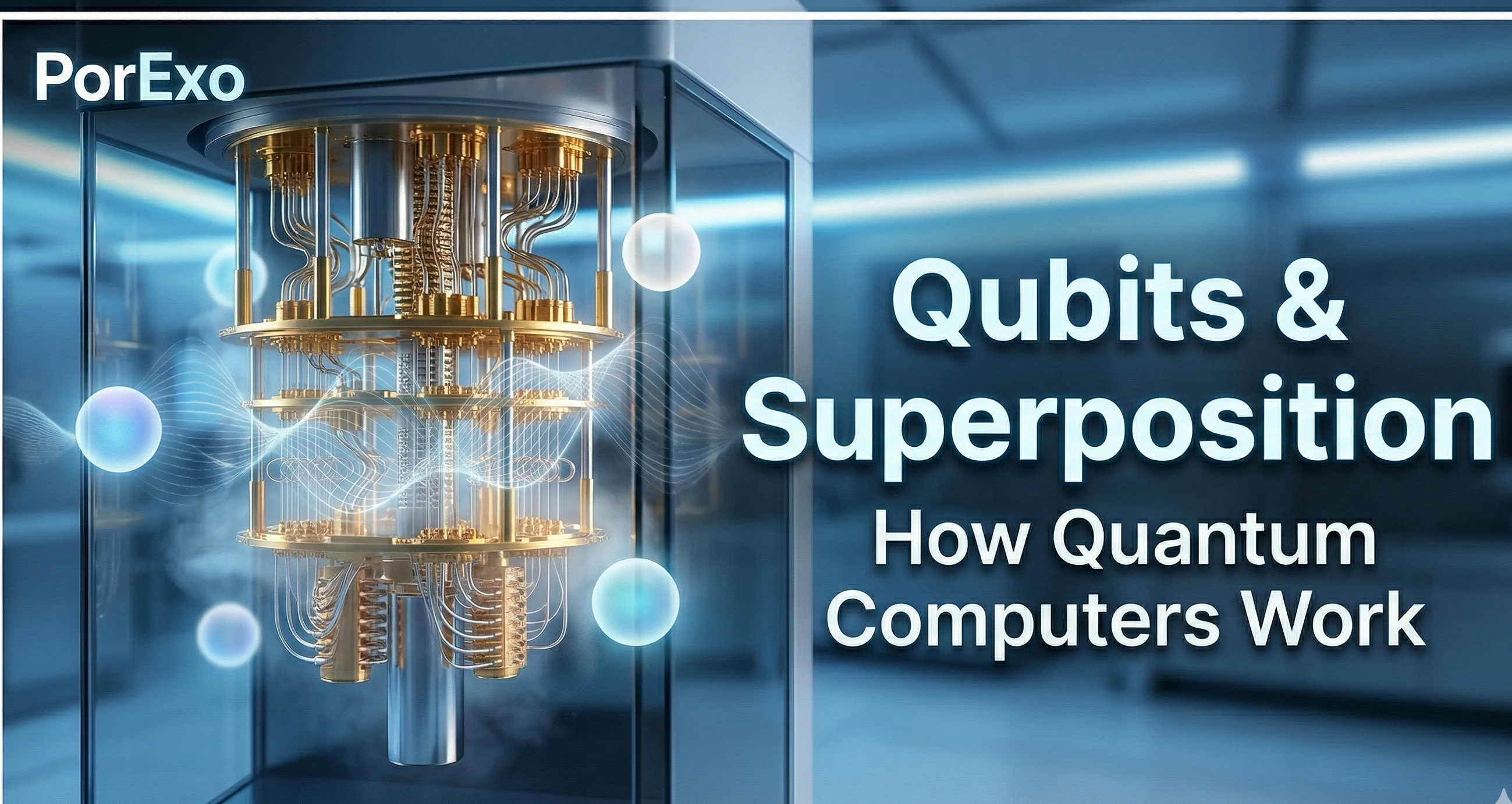
Curious about how quantum computers work? Let's look at the basics of qubits and superposition.
Key Points
- Quantum computers use qubits instead of classical bits.
- Qubits can be in a state of superposition, allowing for parallel processing.
- This superposition gives quantum computers their potential for exponential speedup.
- Quantum algorithms exploit superposition and entanglement for complex calculations.
Understanding the Basics: Bits vs. Qubits
Think of a regular computer bit like a light switch. It can only be in one position at a time: ON (1) or OFF (0). Every piece of data on your phone or laptop is built from millions of these simple on/off switches.
A quantum bit, or qubit, is different. Imagine a spinning coin. While it's in the air, it's not just heads or tails—it's in a fuzzy mix of both possibilities at once. A qubit can be a 0, a 1, or any combination of 0 and 1 simultaneously. This mixed state is called superposition.
# A simple analogy in code:
# A classical bit is one value:
classical_bit = 0  # or classical_bit = 1

# A qubit in superposition is a combination:
# (This is a simplification for illustration)
qubit_state = {'probability_of_0': 0.7, 'probability_of_1': 0.3}
# It's not 0 OR 1. It holds the potential for both.
What Superposition Really Means
Superposition isn't just doing two calculations one after the other. It lets a quantum computer explore many possible paths in a calculation all at the same time. If you have 2 qubits in superposition, they can represent 4 states (00, 01, 10, 11) simultaneously. With 300 qubits, they could, in theory, represent more states than there are atoms in the known universe—all at once.
This is why people talk about quantum computers being faster for specific problems, like simulating molecules for new medicines or optimizing complex routes. They can examine a massive number of possibilities in parallel. For a great visual explanation of these concepts, check out this video from Veritasium on quantum computing.
How Do We Actually Build a Qubit?
Qubits are incredibly fragile. They are often built using:
- Tiny superconducting circuits cooled to near absolute zero.
- Individual electrons or photons.
- Defects in diamonds.
The biggest challenge is maintaining superposition. Any tiny disturbance from heat, vibration, or electromagnetic waves can cause the qubit to "collapse" into a regular 0 or 1 bit—a problem called decoherence. Building quantum computers involves creating extremely isolated and cold environments to protect these delicate states. If you're interested in the hardware side, companies like IBM Quantum offer detailed looks at their quantum systems.
Putting It All Together
So, a quantum computer uses qubits that can be in superposition (many states at once). By carefully manipulating these qubits with quantum gates (similar to logic gates in regular computers), we can run algorithms that process all those parallel states. When the calculation is done, we measure the qubits, causing the superposition to collapse and give us an answer.
It's not a magic box that makes every computer task faster. It's a new kind of tool, exceptionally good for a specific set of very complex problems that are practically impossible for today's supercomputers. For tasks like word processing or browsing the web, your regular computer is—and will remain—perfectly suited.
If you want to play with simple quantum circuits yourself, you might enjoy our Multi Tools page, which hosts various utilities, or explore a dedicated Text Editor for writing about your experiments.
Frequently Asked Questions
📚 Read Next

Can I buy a quantum computer for my home?
Not anytime soon. Today's quantum computers are massive, expensive machines that require specialized labs with extreme cooling systems. You can, however, access them via the cloud from providers like IBM or Google to run experiments.
Will quantum computers break all internet encryption?
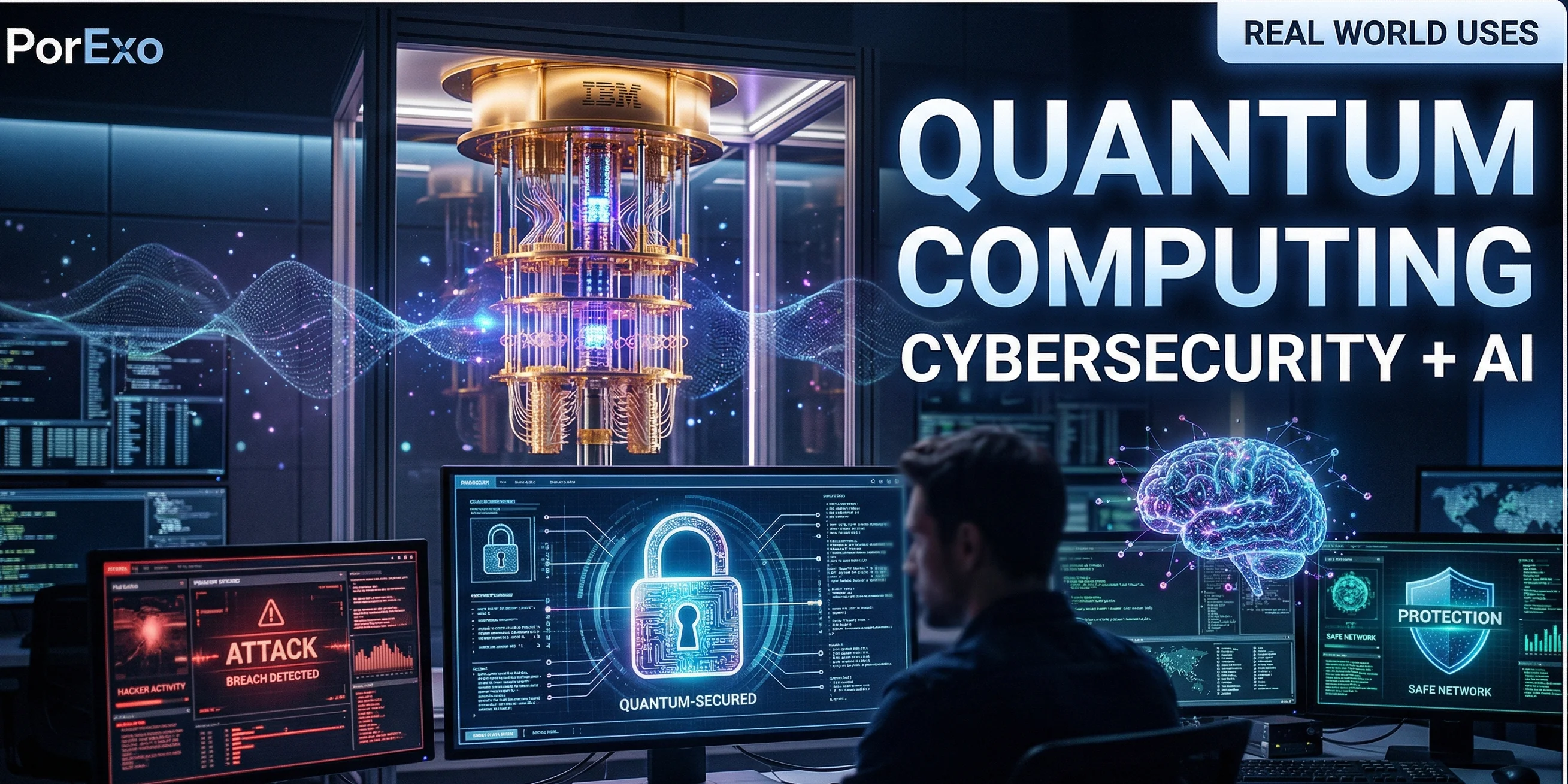
They have the potential to break widely used encryption methods like RSA. This is a known risk, and the field of "post-quantum cryptography" is actively developing new encryption algorithms that are secure against quantum attacks. The transition will take years.
What's the difference between superposition and entanglement?
Superposition is about a single qubit being in multiple states. Entanglement is a powerful connection between two or more qubits where the state of one instantly influences the state of the other, no matter how far apart they are. Algorithms use both properties together.
Are there any useful quantum computers today?
We are in the era of "Noisy Intermediate-Scale Quantum" (NISQ) computers. They are useful for research, testing quantum algorithms, and simulating small molecules. We haven't yet reached the stage of large-scale, fault-tolerant quantum computers that can solve major commercial problems.