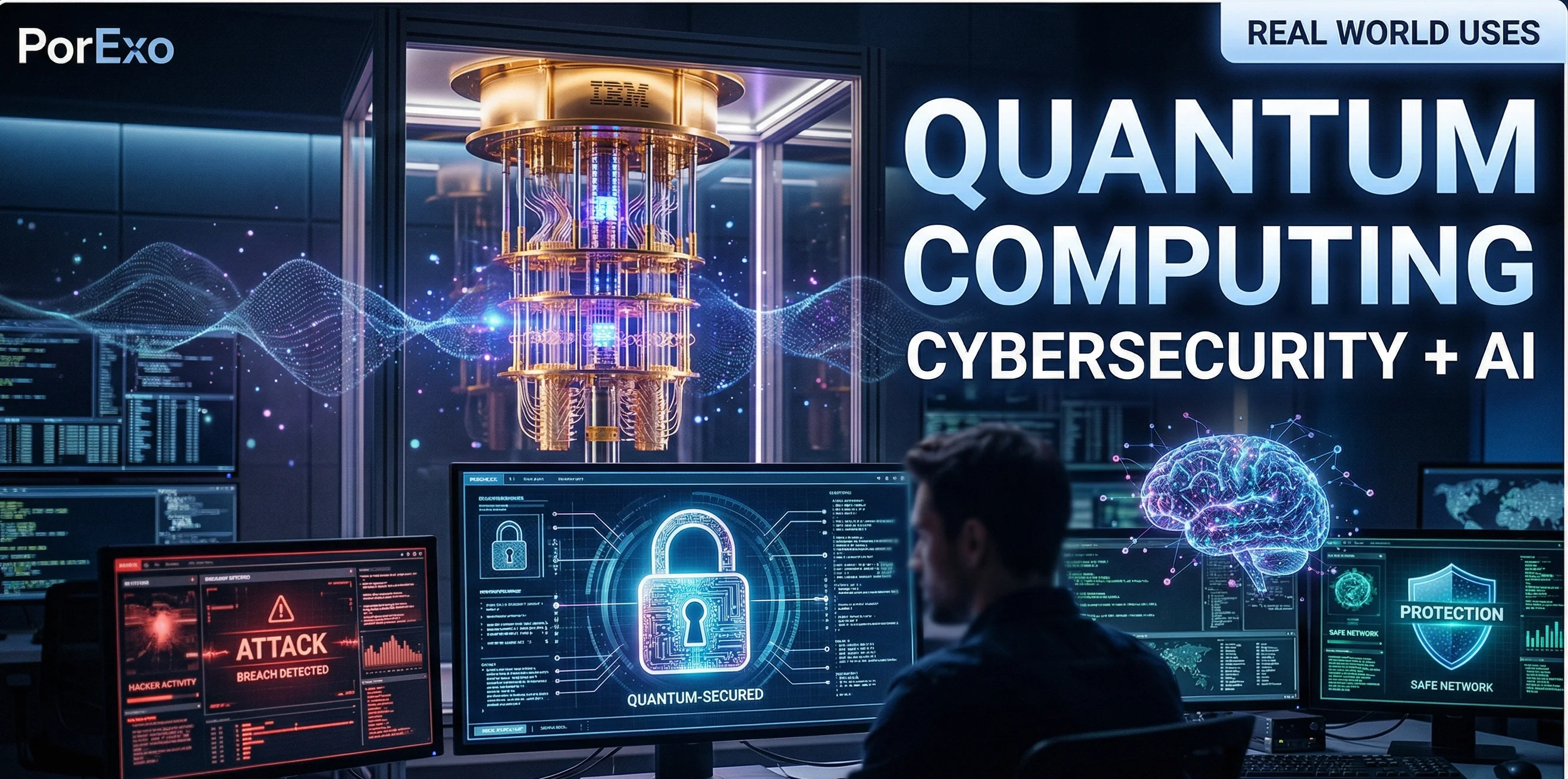
Let's talk about quantum computing. It sounds like science fiction, but it's becoming a real tool that could change how we handle security and artificial intelligence. Think of it as a new kind of computer that works in a fundamentally different way. Instead of just using 0s and 1s, it uses "qubits" that can be both 0 and 1 at the same time. This lets it explore many possibilities simultaneously, which is perfect for tackling really tricky problems.
So, what does this mean for the real world? Here are a few key areas where it's starting to make a difference.
Making Communication Unbreakable
One of the most exciting uses is in cybersecurity, specifically for communication. Today, our online chats, bank transfers, and emails are protected by complex math problems that are very hard for regular computers to crack. But a powerful enough quantum computer could, in theory, break that math.
The solution? Fight fire with fire. Quantum cryptography uses the principles of quantum mechanics itself to create keys for encryption. If someone tries to eavesdrop on a quantum-encrypted message, the act of listening changes the message, alerting both the sender and receiver. It's like sending a letter that self-destructs if anyone opens it along the way. This could lead to communication that is truly secure from any kind of snooping.
Supercharging AI and Machine Learning
AI and machine learning often involve finding the best solution from a massive number of possibilities—like finding the quickest delivery route for hundreds of packages or designing a new, more efficient battery material.
These are called optimization problems, and they can slow down even the best supercomputers. Quantum computers are naturally good at exploring all those possibilities at once. This means they could help AI models:
- Train much faster on complex data.
- Find better, more accurate patterns in information.
- Solve logistical and design problems that are currently too time-consuming.
You could think of it as giving AI a powerful new engine to work with. For a practical look at optimization, check out our Shipping Label Maker, which solves a small-scale real-world logistics problem.
New Frontiers in Encryption
While quantum computers pose a threat to current encryption, they also inspire new ways to protect data. Researchers are developing post-quantum cryptography—new encryption algorithms designed to be secure against attacks from both classical and quantum computers.
It's a race to build stronger digital locks before the new lock-picking tools arrive. This work is crucial for keeping everything from your personal messages to national security data safe in the future.
Spotting Threats in a Blink
In cybersecurity, speed is everything. Quantum computing could revolutionize threat detection by processing enormous datasets—like network traffic logs—almost instantly to spot unusual patterns that signal an attack.
Similarly, in AI tasks like image or speech recognition, quantum processing could help analyze data much faster, leading to more responsive and intelligent systems.
Frequently Asked Questions
📚 Read Next


Is quantum computing a threat to my passwords right now?
Not immediately. The powerful, general-purpose quantum computers needed to break today's encryption don't exist yet. However, the field is advancing, which is why security experts are already working on "post-quantum" encryption standards to prepare for the future.
How can I learn more about the underlying data formats used in computing?
A great place to start is by understanding common data structures like JSON and XML, which are used everywhere in web development and data exchange. You can experiment with them directly using tools like our JSON Editor and XML Editor to see how data is organized.
When will we see these quantum applications in everyday life?
Widespread, everyday use is still likely years away. Right now, quantum computers are mostly in research labs and require extremely cold temperatures to operate. But companies and governments are investing heavily, and we're already seeing early practical experiments in finance, chemistry, and logistics. The progress is steady.
To sum up, quantum computing isn't just a lab experiment. It's a budding technology with clear, practical goals: to create unhackable communication, to solve problems that stump today's computers, and to build a new foundation for data security. It's an exciting space to watch.
For more on how data is manipulated and secured with today's tools, you can explore our suite of online tools, including utilities for creating strong passwords and protecting PDF documents.